Dec 13, 2022
The Future is Now. Are We Ready?
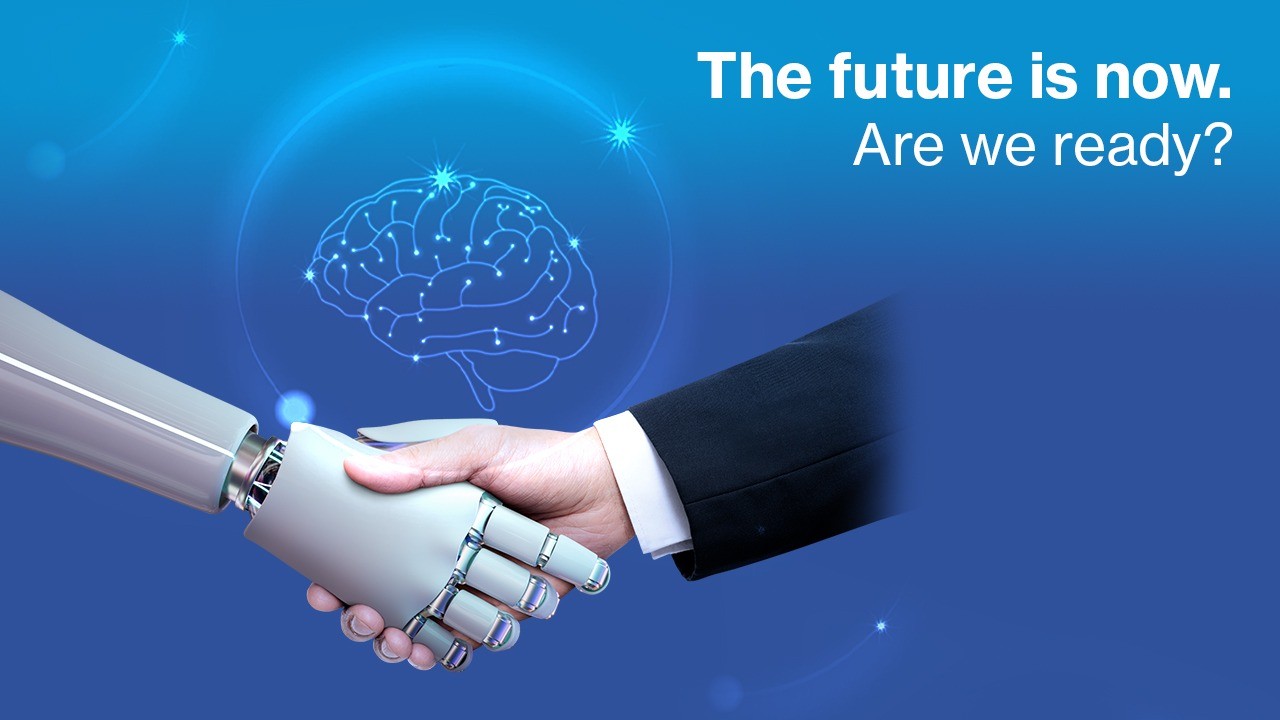
Smart is everything. Self-driving cars, smart homes, digital agents that act for you, and even robots. As technology advances, AI is all the rage, permeating all aspects of our lives – and our jobs.
However, even as we begin to think in that direction, we need to remember a key factor. While robots and other automated devices can be more efficient at diagnostic solving and calculations, it is humans that are behind the subjective side of these practices. We are very much in the midst of the 4th industrial revolution, and we as a species need to evolve to be able to transition and withstand this major shift.
‘Super jobs’ hold more than just the AI perspective in this situation. Other advances in technology like Big Data and the Internet Of Things have already started to play a major role in this 4th Industrial Era. Blockchain and Cryptocurrency are taking the finance and business sectors by storm. NFTs are the new kid on the block. Amidst this level of expansion, our capacity to grow is immense but it also brings in the necessity to equip ourselves with the necessary skills to keep up in this era of change. Skills like cognitive flexibility, digital literacy, and computational thinking are a few technical skills that are almost non-negotiable nowadays.
It was found by The World Economic Forum purely on a quantitative basis that about 75 million current job roles may be displaced due to the shift in labor between humans, machines, and algorithms. While at the same time, it was also found that over 133 million new job roles may emerge. McKinsey predicts that by 2027, over 60% of the workforce will consist of freelance workers. With such profound changes on the horizon, we need to take action. We need to equip ourselves to not only work with machines but also work with humans on the other side of the globe. The pace is accelerating.
No doubt, human-machine collaboration is the way forward, it will still do well for us to keep on top of our creative skills and maintain an innovative mindset. If you can think out of the box, you will be fine. How will we evolve? Re-skilling and upskilling must be a collective priority to take into account.
There is an old saying, ‘You can only take the horse to the lake, you can’t make it drink the water.’ Similarly, knowledge of the coming situation can only do so much. It is the willingness to act upon it that will shed a difference. As a species, we need to grow into this change. Here are a few skills required to do so:
Innovation and rational risk-taking along the road are important for successful transformational change, especially when the future state is vastly different from the existing one. This necessitates critical thinking. In a recent survey of 20 countries and territories conducted by Dale Carnegie Training, 57 percent of respondents identified critical thinking as one of the top skills required to prepare for successful work in an environment.
The trend forecast for the future is very clear. Innovate or die trying. In the current work environment, the average employee has no room for creativity with their minds wrapped around urgent tasks that induce stress. Creativitycan only be unleashed by releasing people's intrinsic motivation, relieving their minds of unnecessary stress, and encouraging people to broaden their knowledge and professional networks.
Dale Carnegie's approach to relationships and the interpersonal skills he began teaching decades ago is based on the foundations for agility. People in agile organizations are free to experiment, adapt, and innovate. As the pace of change quickens and with AI at our doorstep, these imperatives have gained prominence, but in reality, they've always been part of the characteristics that set people and companies apart.
Our world is now an open book where borders are merely dotted lines on a map. Cultural competency is concerned with the skills involved, and developing those skills is a continuous process. Empathy in communication, effective conflict management, and adept change leadership are all essential components.
Learning all of the above-mentioned skills is only possible if you are open to change and have a growth mindset. In this rapidly ever-changing world, you need to be able to learn and relearn where necessary. Curiosity is crucial for one’s development.
In a Hart Research Associates study, 93% of employers reported that “a candidate’s demonstrated capacity to think critically, communicate clearly, and solve complex problems is more important than his or her undergraduate major.”.
Dale Carnegie said, “Ask yourself, what is the worst that can happen? Then prepare to accept it.” If the worst thing to you is losing your job or not finding one then begin honing your skills now. In this VUCA world, as technology continues to advance and develop, it’s important to consider what skills you’ll need to stay secure in your career in order to future-proof it.
Previous Blog